
Minster Musings

In 1906 the eight-hundred-year-old cathedral at Winchester was sinking into ground. It was under serious threat of collapse. Cracks had begun appearing in the wall, and chunks of stone had begun falling from the ceiling. The problem lay underground; below the apparent solid ground on which the builders had laid the foundations lay a thick waterlogged bed of peat. Originally massive beech logs had supported the building, but they were now rotting. The solution seemed simple enough: dig trenches beneath the wall and replace the decaying timber with concrete. This however turned out to be impossible, for as soon as the trenches were dug, they filled with dark impenetrable peat water faster than they could be pumped out.
The contractor decided that if they couldn’t keep the water out, they would have to work in it, needing therefore, the services of a diver.
William Walker was born in 1869 to a working-class family in Surrey, he’d trained as a deep-sea diver at Portsmouth Dockyard and made his career in the unglamorous world of underwater construction. In April 1906, he arrived in Winchester expected a temporary assignment; maybe a year at most. He ended up staying for five and a half years.
Every morning William would put on his diving suit; remember, this was 1906, there was no state-of-the-art diving gear as we understand it today. Instead, he would put on two hundred pounds of canvas, rubber, copper, and with lead-lined boots he would anchor himself to the bottom. A rubber air hose connected him to the surface, where workers manually pumped oxygen into his helmet throughout each dive.
William descended into absolute darkness; he couldn’t see his hands in front of his face. He was to work entirely by touch, feeling his way through the submerged trenches six meters below the surface. Workers above would prepare trenches and bags of concrete. When the trenches flooded, Walker would descend. Working blind in the frigid water, he would remove the last of the rotting timber by hand, then begin placing bags of concrete, one by one, in precise positions to support the walls above. Each bag had to be positioned correctly by feel alone. He worked two four-hour shifts most days, spending up to six hours underwater. The heavy suit took so long to remove that during breaks, he would simply unscrew his helmet, eat lunch, smoke his pipe, and then seal himself back inside. Every weekend, he would cycle seventy miles home to his wife and growing family in South Norwood, then return by train Monday morning to do it all again. Month after month. Year after year.
By the time Walker finished in September 1911, he had placed 25,800 bags of concrete. 114,900 concrete blocks. 900,000 bricks. Nearly a million bricks, laid one at a time, by hand, in complete darkness, underwater. Every single one positioned by a man who couldn’t see what he was doing, who relied entirely on years of experience, muscle memory, and an unwavering commitment to precision.
Once Walker completed his underwater foundation work, pumps could finally drain the area without risking the cathedral’s collapse and conventional workers could move in to complete the restoration.
The building was saved. King George V personally honoured Walker in July 1912, making him a Member of the Royal Victorian Order. Newspapers across Britain celebrated “the diver who saved Winchester Cathedral with his own hands.”
Yet despite this recognition, Walker’s story gradually faded from public consciousness. He returned to diving work, continuing his career in the same quiet, professional manner he’d always maintained. Six years later, in 1918, William Walker died during the global Spanish flu pandemic. He was forty-nine years old.
For decades, few people beyond Winchester remembered his name. The cathedral stood magnificently restored, but the man who had literally held it up was largely forgotten. It wasn’t until 1964, more than fifty years after his work, that a statue was erected inside the cathedral to commemorate his achievement.
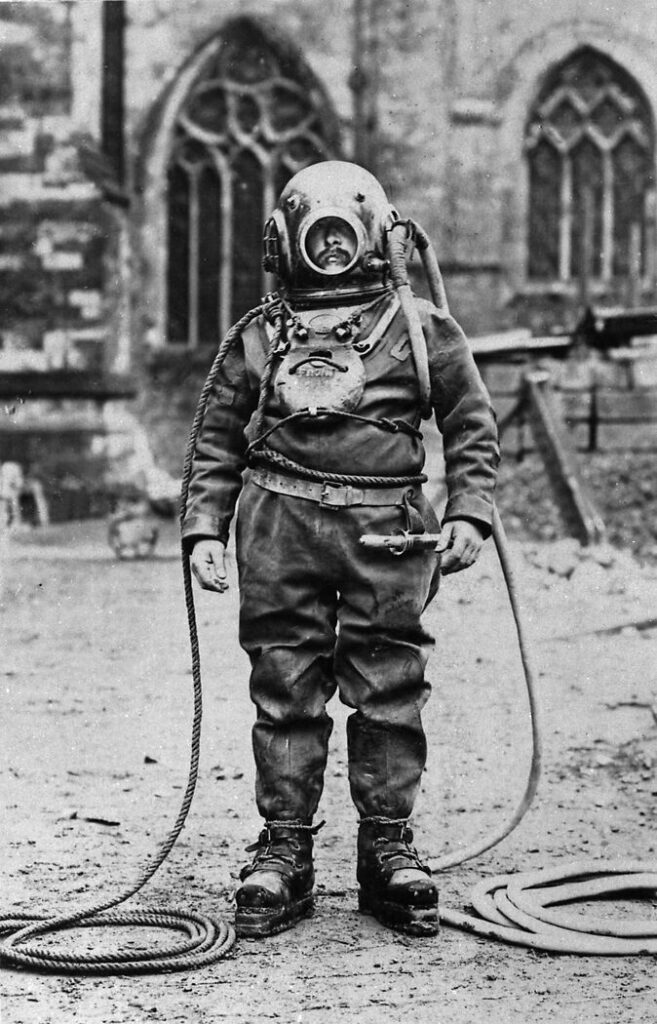
If you want to know more the story is readily available via a Google search, but what strikes me about is the quiet, unassuming heroism of someone who simply did the job that needed doing, carrying on, despite the difficulty, despite the odds. No matter how difficult, no matter how long it took, no matter how little recognition it might bring, he did what he had to do. William didn’t seek fame; he didn’t demand special acknowledgment. He simply descended into that black water every day because the cathedral needed saving and he had the skills to save it.
We live in an age that celebrates instant success and viral achievement. I seem to recall reading a little while since, that an overwhelming number of young people, when surveyed, indicated that they would like to be famous. Walker’s story reminds us that some of history’s most important work happens slowly, in darkness, known only to the person doing it and perhaps a handful of others. That the foundation beneath the foundation matters just as much as the soaring heights everyone admires.
Winchester Cathedral still stands today, drawing hundreds of thousands of visitors each year most of whom will never think about what lies beneath their feet. It is not just about what you can see, and wonder at, but that when it began to fall, one person cared enough to spend five and a half years of his life saving it.
And that’s perhaps a lesson for us today, as we look about us and see a world that we may easily conclude is perilously close to collapse. It’s not, power, glory, fame, or media attention that will ultimately make the difference, but the unseen, unassuming, yet faithful living, working, serving, praying of us all that will make the difference. And maybe that’s the most powerful kind of legacy we can all leave: work done so well that no one has to think about it, holding up something greater than yourself, long after you’re gone.
Revd David Carpenter
Lecturer
February in Pictures
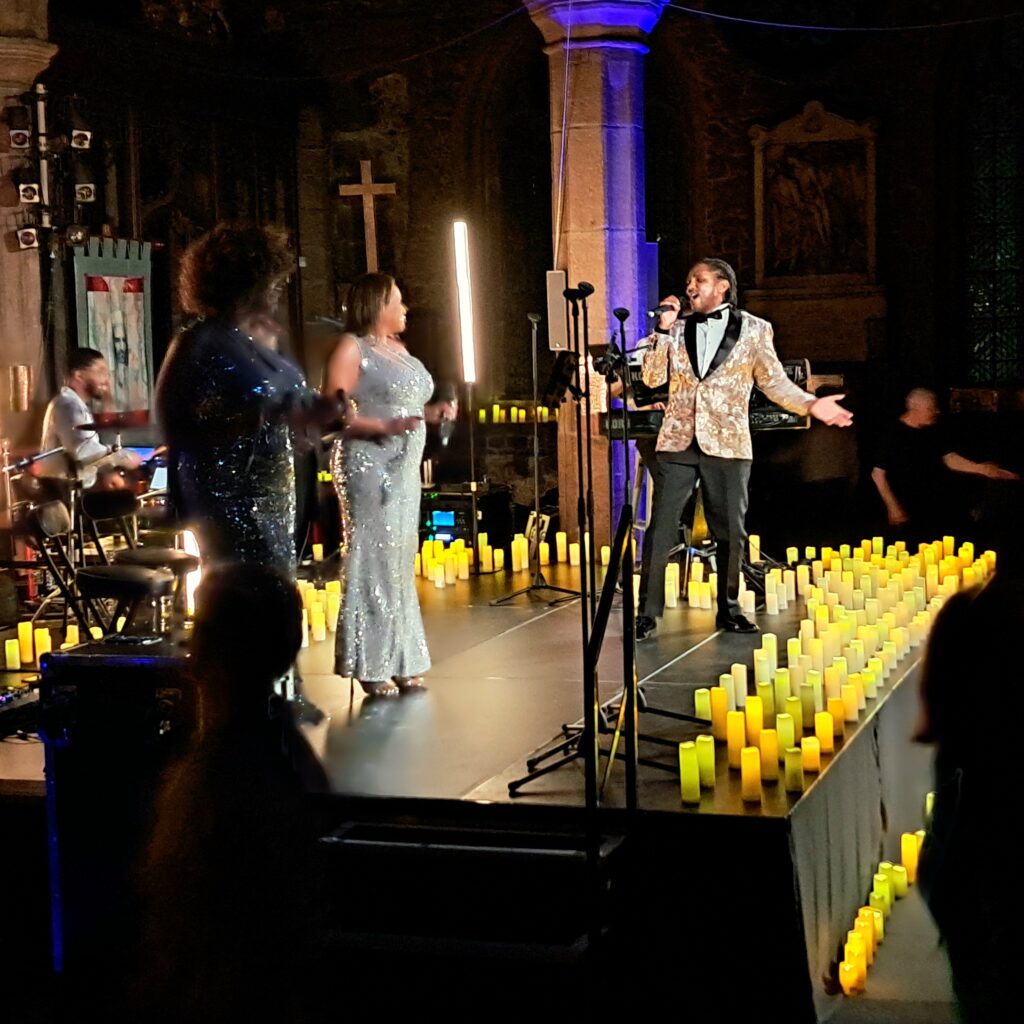
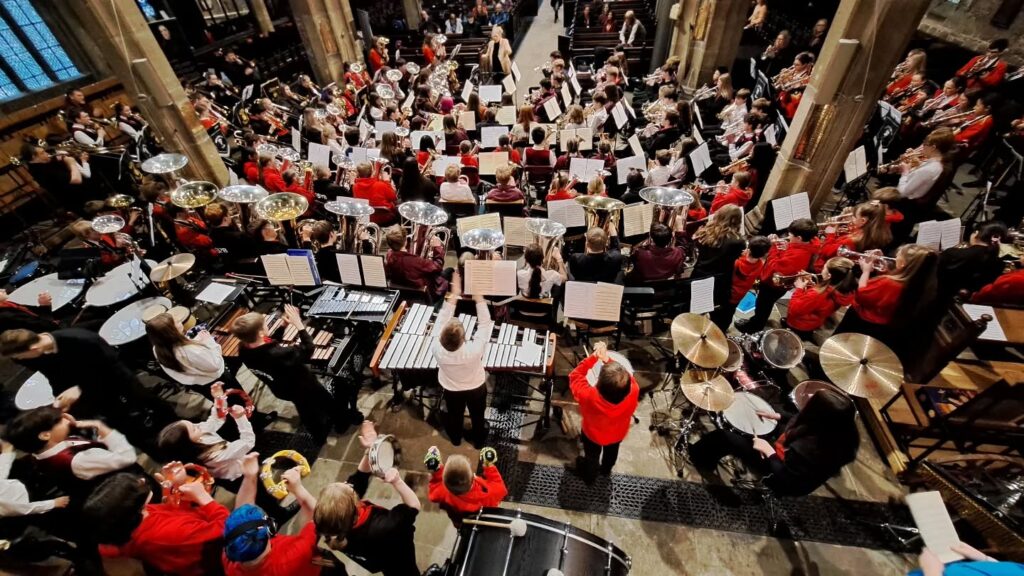
Six concerts were held at the Minster in February, a month that traditionally was quiet…..! Luther Vandross (above) and Bruce Springsteen Candlelight tribute nights filled the Minster, as did 2 Grayston Unity concerts and the annual Halifax Youth Band Festival, featuring over 170 young brass platers.
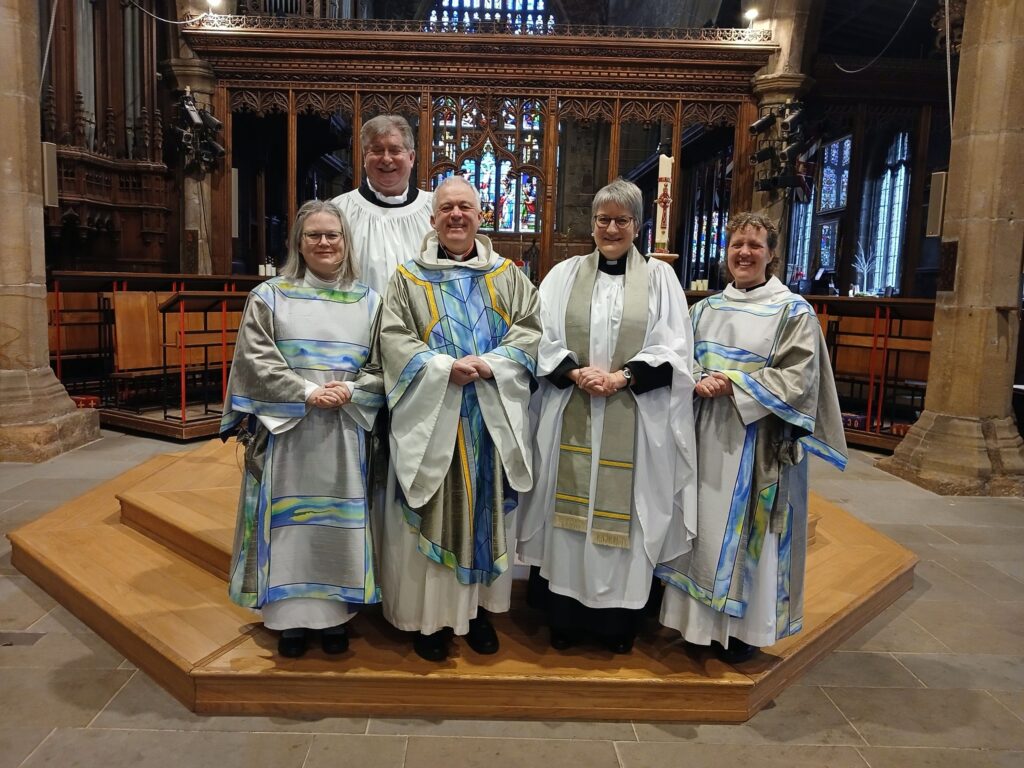
February saw the beginning of Lent and the launch of the Minster’s 2026 Festival of Faith. Our Sunday Eucharist Sermons are exploring the theme of Hope in today’s world and we welcome a number of guest preachers, including The Revd Dr Dorothea Bertschmann, Academic Dean of the College of the Resurrection, Mirfield.
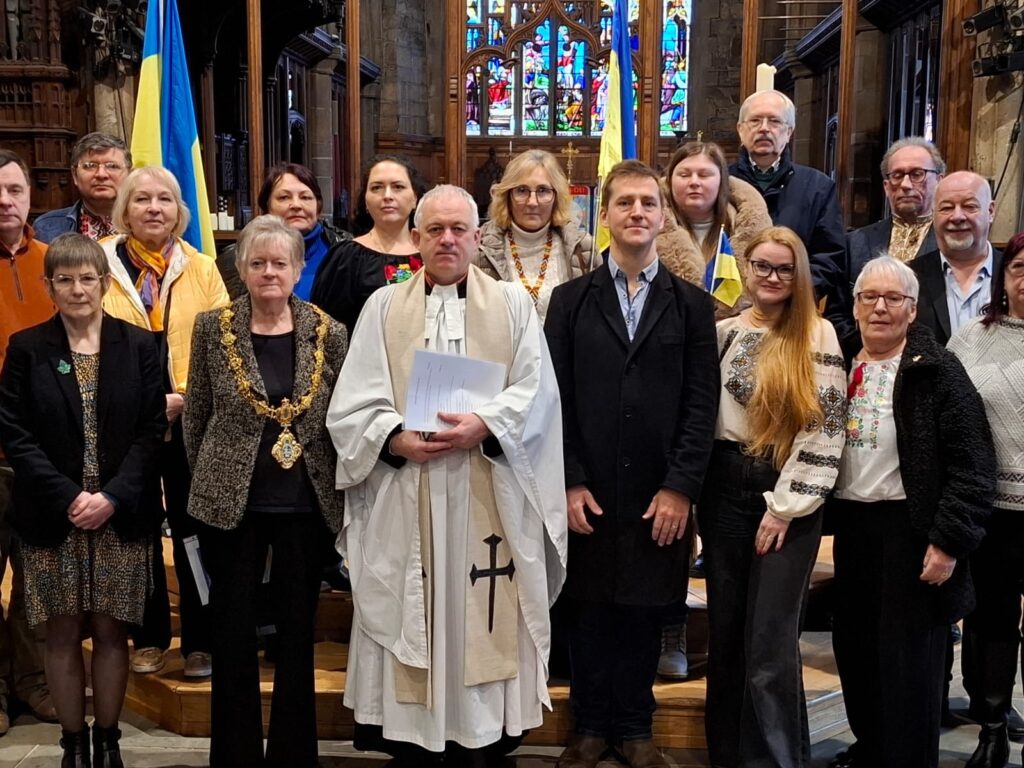
The month also saw the 4th Anniversary of the War in Ukraine and the Minster welcomed the Ukrainian community and civic leaders to pray for peace.

The Minster is delighted to financially support the charity Slow the flow in their environmental work as part of our Eco Church reponsibility towards our stewardship of the created order. The charity celebrated their 10th anniversary this month.
Work finally finished on the roof above the Wellington Chapel, so we can at last say goodbye to the scaffolding on the South Side of the Minster; but it’s not going far – only as far as the North Side of the Minster!
Further conservation work was also carried out on the organ in February completing the work described last month. The organ is now in the care of Harrison and Harrison of Durham who originally built the organ in 1928 (using a lot of older material, so daying back to 1766). Harrisons are very excited about taking our organ back into their care and spent three days in February giving it a thorough tune and fixing faults. Our first ‘Thursday @ One’ recital for 2026 is this Thursday – come along to hear it in all it’s glory!
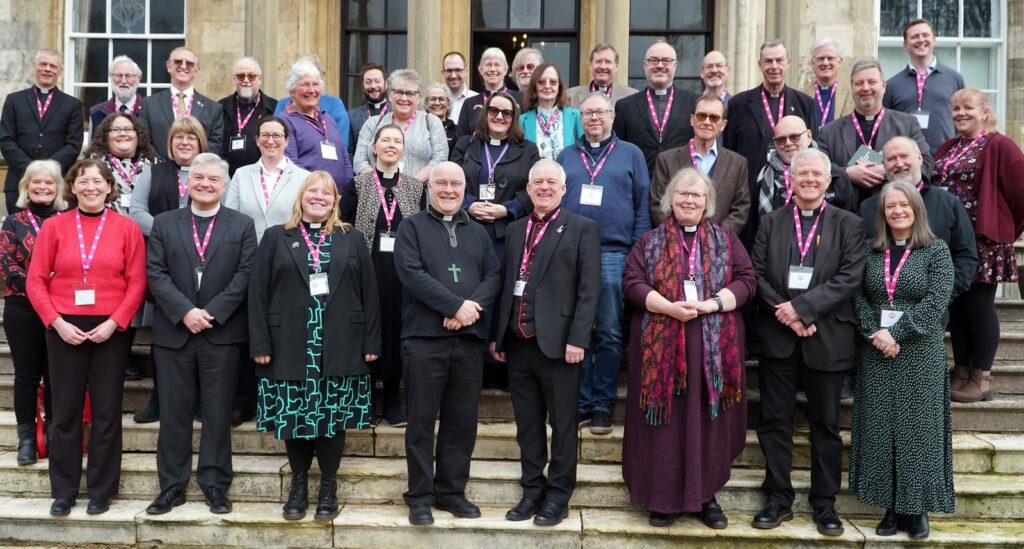
Rev Hilary Barber is the Chair of the Major Churches Network and on February 25th co-hosted a conference with the Archbishop of York at Bishopsthorpe about the Faith in the North initiative.
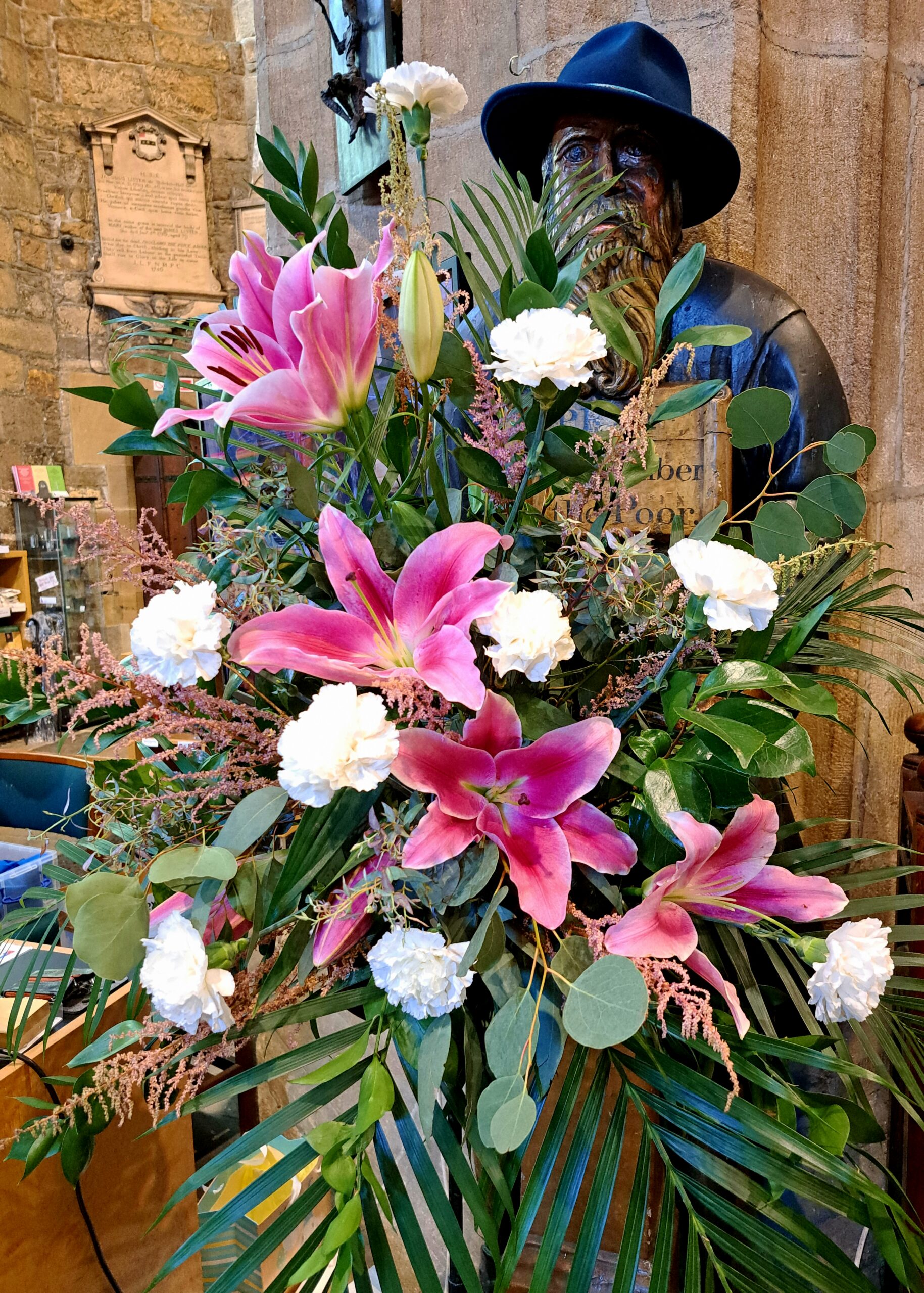
Easter Lilies: If you would like to donate towards the cost of Easter Lilies at the Minster, perhaps in memory of a loved one, please complete one of the envelopes at the back of the Minster. Alternatively donations towards Lilies can be made by clicking HERE and writing the names of those to be remembered as part of the message.
Our Festival of Faith continues throughout Lent with all sorts of events, music and worship. Don’t miss the Festival of Women this coming Saturday with the performance of ‘WonderWoman – The Astronomical Life of Caroline Herschel’ in the evening. Tickets are available at the Minster Shop or online HERE!


